Hayward is at its best when nobody tries to make a large group move as one unit all day.
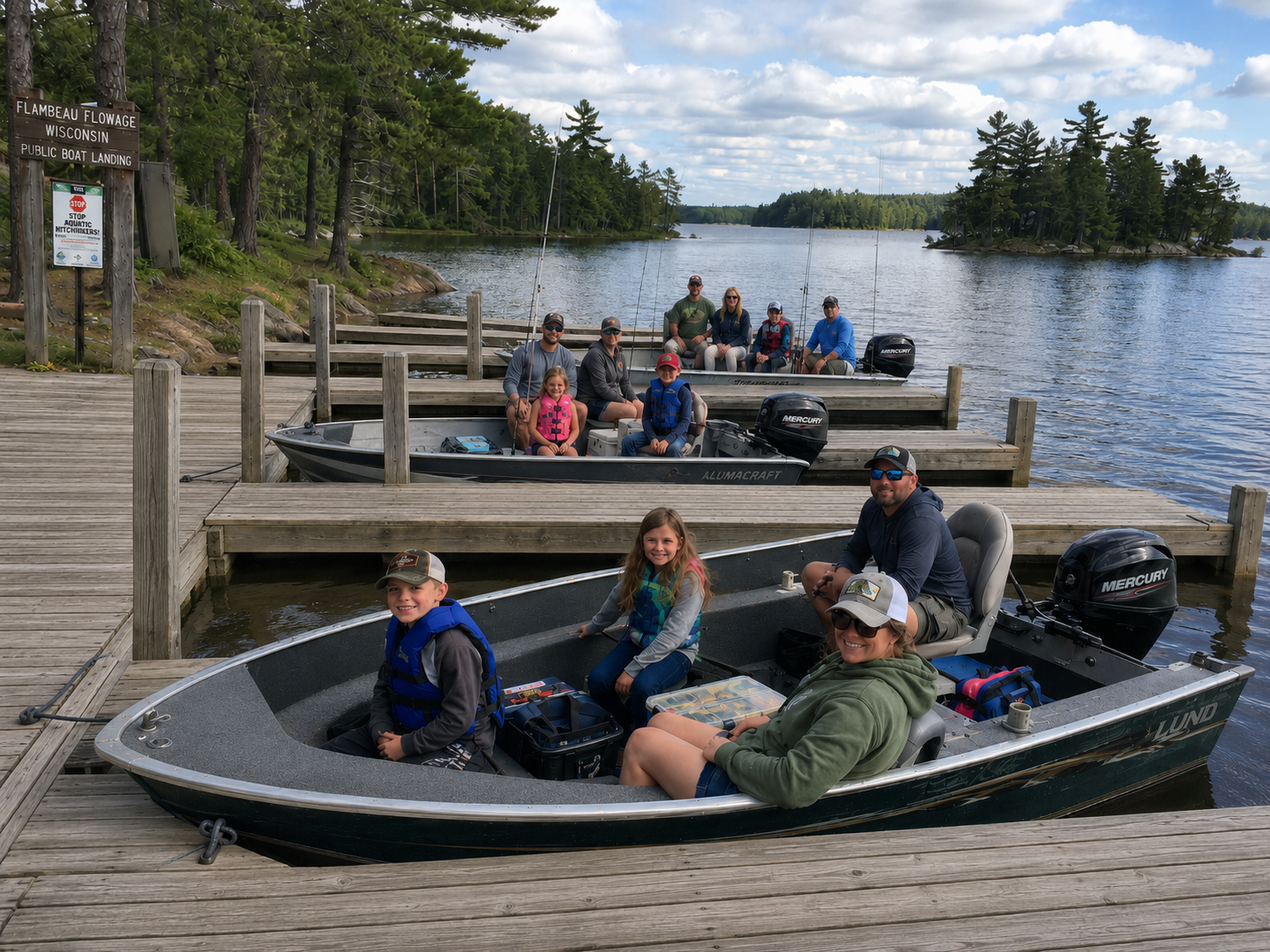
That is the local secret. Give the early risers a fishing boat. Send the cyclists to Hatchery Creek or the Birkie Trail. Let the grandparents take the younger kids to the giant musky. Meet again for a fish fry, a supper-club dinner or sunset at the cabin. Hayward has enough lakes, trails, food traditions and annual events to give three generations separate adventures without making the reunion feel scattered.
For a group of 15, 20 or even 30-plus, the town is more than a pin on the map. It is the service center, supply stop and shared playground for a wide sweep of Sawyer County. Downtown Hayward is compact enough for a split-and-rally afternoon. The Chippewa Flowage is large enough to make a week feel too short. Cable, Stone Lake, Trego, Copper Falls and Bayfield add day-trip range when the group wants a change of scenery.
This guide is built specifically for big cabin crews: extended families, fishing parties, riding clubs, wedding guests, milestone birthdays, reunions, multi-family vacations and teams that need more planning than a couple traveling alone. The lodging section includes only the five properties with a Hayward town identifier and a published capacity of at least 15 found on the RentWisconsinCabins.com Hayward page.
Why Hayward works for a 15-plus-person vacation
Large groups need options that can run at the same time. Hayward supplies them.
On a summer morning, one pod can fish, another can paddle, another can golf and another can browse downtown. In fall, the group can divide between mountain-bike trails, an art-and-food festival and a slow scenic drive. Winter opens cross-country ski, fat-bike and snowmobile routes, while cabin kitchens and game rooms become part of the vacation instead of a fallback. Spring is quieter and especially good for anglers, wildlife watchers and groups willing to work around changing trail conditions.
Hayward also has a useful mix of “big outing” experiences and low-pressure filler. A guided fishing morning requires reservations and coordination. A walk downtown for coffee, candy and the giant musky does not. A full-group supper-club reservation can anchor the evening, while leftovers and cabin groceries solve the nights when nobody wants to move 20 people again.
The best large-group schedule uses one anchor activity per day, then two or three optional tracks. Print the day’s meeting point and departure time. Put the cabin address in every driver’s phone. Choose one person to handle boat logistics, one to manage food and one to send the daily group message. A vacation this size becomes much more relaxed when nobody has to ask the same coordinator 15 separate questions.
Hayward by season
Summer: water days, festival streets and long evenings
Summer is the classic Hayward season, but a group should resist filling every hour. Alternate an ambitious day with an easy one.
Start with the water. The Chippewa Flowage covers roughly 15,300 acres and threads around about 200 undeveloped islands, with bays and channels that make each boat ride feel different. It is a fine place to build a group day around fishing, cruising, paddling and a dockside meal. It is also complex water. The Wisconsin DNR cautions boaters about stumps, floating bogs, driftwood and changing conditions, so appoint an experienced boat lead, carry a current map or GPS and slow down in unfamiliar channels.
Do not assume one pontoon will carry the whole crew, coolers and gear safely. For 15 or more, plan two or three legal-capacity boats, name the passengers before departure and give every boat the same rendezvous point. If the group includes serious anglers and first-timers, split by interest rather than age. The people who want to cast for hours will be happier apart from the people who want to swim, snack and cruise.
Hayward’s summer calendar brings the town into the action. Musky Festival fills downtown with arts and crafts, live music, food, children’s activities, competitions and a parade. The Lumberjack World Championships turn the Lumberjack Bowl on Lake Hayward into a stage for chopping, sawing, logrolling, boom running, speed climbing and axe throwing. The annual Honor the Earth homecoming and powwow is hosted by the Lac Courte Oreilles Band; visitors should review current guidance, enter as respectful guests and follow the event’s photography and arena etiquette.
Festival weekends reward advance planning. Pick one parking area, establish a visible meeting landmark and let smaller pods explore. Trying to move 18 people down a crowded sidewalk in a single pack is not togetherness; it is traffic.
For a lower-key family outing, Wilderness Walk Zoo spreads animal encounters, walking paths and recreation across a wooded property. Because it operates seasonally, check current hours before loading the cars. The Fresh Water Fishing Hall of Fame is another Hayward-only stop: its enormous musky has a viewing platform inside the fish’s mouth, while the museum grounds hold fishing artifacts, mounted fish and antique motors. The museum’s current visitor information should be checked before arrival.
Fall: color, bikes, cranberries and cabin dinners
Fall belongs to groups that like cool mornings and flexible afternoons. It is the season to put a long ride, a downtown event or a scenic drive on the calendar, then return to the cabin early enough to cook together.
The Chequamegon Mountain Bike Festival sends riders from downtown Hayward toward Cable on forest roads, trail and classic Northwoods terrain. The event includes a long course, a shorter option and youth activity, making it a natural focal point for mixed households in which some people race and others support, explore or meet the riders at the finish. Even outside the event, the area’s trail network lets a group sort itself by distance and skill.
Downtown’s annual Fall Festival brings art, crafts, food, music and children’s activities together. This is another day when the pod system works: shoppers take one route, food-focused travelers take another and families with young children set a shorter loop. Everybody meets at an agreed time instead of trying to keep the whole party shoulder to shoulder.
Stone Lake’s annual Cranberry Festival makes a strong fall day trip, with cranberry products, marsh-related activities, a parade, food, music and a large vendor field. The festival site is the place to confirm the current program. Bring cash and reusable bags, and make room in the vehicle for berries, baked goods and the things nobody planned to buy.
Outside event weekends, use the season for a trail-and-supper rhythm. Ride or hike in the morning, make a downtown lunch stop, then return for a group chili, stew or fish fry at the cabin. Fall evenings cool quickly around the lakes, so sunset should be treated as the start of the second half of the day, not the end of it.
Winter: Birkie country, snowmobile miles and a warm cabin base
Hayward in winter is not simply the summer trip with snow. The town’s identity changes.
The American Birkebeiner brings North America’s largest cross-country ski marathon to a Main Street finish after racers travel from the Cable area toward Hayward. The Lions Pre-Birkie adds another annual race to the winter calendar. Even if nobody in the group is racing, the atmosphere can be worth building a trip around—but lodging, dining, parking and road movement require more advance thought than an ordinary winter weekend.
For everyday skiing, the Birkie Trail system and Mt. Telemark Village provide extensive trail options, a paved recreation loop and snowmaking-supported areas. A large group should not pick one distance for everybody. Build a short loop, a medium outing and a committed-skier route, then choose a warm reunion point.
Fat bikers can use groomed winter mileage within the Chequamegon Area Mountain Bike Association network. Snowmobile groups can draw from the Sawyer County area’s hundreds of trail miles, supported by local clubs. Use the Sawyer County Snowmobile & ATV Alliance maps and conditions, follow current closures and keep the group on marked routes. The DNR warns that currents and variable conditions can create lake-ice hazards even in cold weather. Local trail status and lake knowledge outrank assumptions.
Winter group planning is mostly about transitions. Assign trailers and riders before departure. Keep dry gloves and socks in labeled bags. Decide who will return early with children or anyone getting cold. Build at least one cabin night around soup, cards and a tournament rather than asking the entire group to gear up again for dinner.
Spring: anglers, moving water and a slower pace
Spring is good for groups that enjoy the Northwoods between headline seasons. Fishing and the return of open water lead the trip, while wildlife, waterfalls and quieter roads add range.
Hayward is the original home of Fishing Has No Boundaries, whose local adaptive fishing event on the Chippewa Flowage pairs participants with volunteers and accessible support. It reflects an important local truth: a water-based trip can be designed for more bodies and abilities when organizers ask the right questions in advance. It’s Cabin Time is a proud supporter of their cause!
Spring conditions are changeable. Trails may close to protect soft surfaces, lake temperatures remain dangerous and river levels can change the character of a paddle. Treat current agency notices as part of the itinerary. If rain or mud cancels the outdoor plan, use downtown, the fishing museum, a group lunch or a movie or performance at the Park Center as the day’s main event rather than forcing an outing onto vulnerable trails.
Build one great Hayward lake day
Hayward’s lake culture is broader than “go fishing.” A well-run group lake day has roles, timing and an exit plan.
For the anglers, the Hayward Guide Service association connects visitors with area fishing guides who can supply boats, safety gear and local knowledge. A group of 15 should expect to book multiple guides or boats. Put experienced anglers together, place beginners with the most patient guide and be honest about children, mobility needs and preferred species. A coordinated half-day often works better than putting everyone on the water from dawn until dinner.
For the non-anglers, build a shoreline pod and a paddle pod. The shoreline group can handle the cooler, picnic and younger swimmers. The paddle group can explore a protected bay or smaller lake rather than crossing busy open water. Everyone wears a properly fitted personal flotation device. One person keeps the launch key, one keeps the emergency contacts and nobody assumes somebody else counted the passengers.
On the Chippewa Flowage, dockside dining can turn transportation into part of the outing. The Landing Resort serves meals close to its dock, and Pat’s Landing combines a bar and grill with marina activity and water views. Call ahead with the real headcount. A party of 18 arriving unannounced by boat can strain even an experienced lake restaurant.
The quieter lakes and flowages around Hayward give the group a different rhythm. Lost Land Lake is known for no-wake water and connects to Teal Lake by channel. The Tiger Cat Flowage chain rewards paddlers and anglers who prefer smaller-water exploration. Mosbaek Lake provides a more contained setting. Match the day to the water beside the cabin rather than assuming every group needs to trailer to the biggest lake.
Downtown Hayward, block by block
You do not need a separate downtown guide. Here is the route.
Start on Dakota Avenue at Backroads Coffee for coffee, bakery items and a simple lunch option. Do not send all 20 people to the counter at once. Have one person collect drink orders in advance, or let the early risers go first while the rest of the party parks.
From there, walk toward Main Street and split into small browsing groups. One pod can look for fishing and outdoor gear, another can handle gifts and souvenirs, and a third can move at kid speed. Set a specific reunion point and time. “We’ll find each other” is not a plan during an annual event.
For lunch, stagger the group between a few direct choices. Anglers Bar & Grill is a longtime Main Street stop for burgers, pizza and Mexican-influenced plates in a room full of local history and taxidermy. Main Street Tacos works for a faster taco, burrito or fajita meal. The Social Kitchen & Cocktails offers a more composed meal and cocktails; submit a reservation request or call rather than assuming a large walk-in can sit together.
Next, cross over to the Fresh Water Fishing Hall of Fame and climb into the giant musky’s mouth if the museum is operating. It is wonderfully excessive, completely specific to Hayward and one of the rare attractions where the group photo is part of the point.
Finish with candy. Tremblay’s Sweet Shop is the downtown stop for fudge, brittle, turtles and hand-dipped chocolates. Buy a cabin box, label anything that must survive until the drive home and accept that some of it will not.
If downtown is hosting Musky Festival, Fall Festival or a race finish, reverse the logic: park once, make the event the anchor and treat shops and meals as optional side routes. Choose one landmark for regrouping and send the location in writing.
Trails for walkers, riders and serious cyclists
Hayward’s trail advantage is variety close to town.
For mountain bikers who want a convenient local ride, the CAMBA Hayward Cluster includes Hatchery Creek, an intermediate singletrack route with cutoffs that make it easier to adjust the outing. That is valuable for a large group: start together, then let riders shorten the loop without making the whole party turn around.
North of Hayward, the Seeley Cluster includes Seeley Pass and Flow Mama, two intermediate routes that can be linked for a longer ride. Put a sweep rider at the back, carry repair tools and share the trailhead location before leaving cellular service.
For mixed groups, Mt. Telemark Village and the wider Birkie network can host walkers, runners, cyclists and skiers at different times of year. Keep the trail pod sizes manageable and check surface rules before the trip. A trail that welcomes bikes in one season may be closed during a soft-surface period.
Motorized groups have even more logistics. Sawyer County clubs maintain a large ATV, UTV and snowmobile network, but trail access is not permission to improvise. Download current maps, confirm machine registrations, identify fuel stops and assign a final rider who knows the route. At road crossings and intersections, wait until the next rider sees the turn. This “corner-marking” habit prevents a long group from becoming three lost groups.
More ways to divide a big group
Golf crews
Big Fish Golf Club has an 18-hole Pete Dye course, a restaurant and event space that can support a golf-centered reunion or corporate group. Hayward Golf Club offers another public 18-hole option close to town. Reserve consecutive tee times, sort foursomes before arrival and decide whether the competition is serious, social or both.
Arts and rainy-day travelers
The Park Center presents music, theater, film, dance and comedy in a historic downtown venue. Check the current program, ask about accessible seating and make it the anchor for a rainy evening. Cabin game brackets, a group cooking challenge and the fishing museum can cover the rest of a wet-weather day without sending everybody on a long drive.
Family reunions
Give every generation ownership of one activity. Grandparents might choose the supper club. Teenagers might run the photo scavenger hunt downtown. Anglers choose one morning. Young children choose the zoo or the giant musky. The itinerary feels shared when each pod contributes instead of being managed from above.
Wedding and celebration groups
Large cabin groups often include people who are not vacationing on the same schedule. Build one fixed celebration block and leave the remaining time loose. Big Fish has event space, while The Steakhouse & Lodge offers banquet and catering options. Ask about room layout, deposits, menu deadlines, accessibility and transportation before promising one plan to the whole group.
Accessibility-minded groups
Ask specific questions instead of using a vague “accessible” label. Does the attraction have a step-free entrance? Is there an accessible restroom? How far is the parking area from the dock? Can a guide accommodate a transfer? Wilderness Walk notes that wheelchairs may be available upon request, the Park Center provides accessible seating and Fishing Has No Boundaries offers a model for adaptive recreation. Confirm current details directly because one feature does not make every part of an experience accessible.
Where a group of 15 or more should eat
Hayward dining works best when the group uses three different modes: one reserved full-group dinner, one or two split-pod meals and several cabin meals.
For the classic Wisconsin supper-club experience, The Ranch Supper Club is known for steaks, seafood and cocktails, while Tally Ho Supper Club handles traditional dining as well as private functions and catering. Reserve early, provide an honest headcount and ask whether the party will be seated together, at adjacent tables or in a private area.
For a bigger formal meal, banquet or catered gathering, The Steakhouse & Lodge is built to discuss group service. For pizza night, Coop’s Pizza is a practical Hayward option for pizza, sandwiches and Italian comfort food. Order before everybody is hungry, assign one pickup vehicle and verify the number of pizzas against the group’s appetite—not just the number of people.
For breakfast and lunch, splitting is usually kinder to the kitchens and the group. Send a coffee pod to Backroads, a downtown lunch pod to Anglers or Main Street Tacos and a lake pod to The Landing or Pat’s Landing. Then reunite for dinner.
Cabin meals deserve equal status. Plan a taco bar, fish fry, soup-and-sandwich night or grill night around stations rather than one narrow serving line. Put drinks somewhere that does not block the refrigerator. Label allergy-safe food. Bring storage containers, foil, sharp knives, a meat thermometer and more ice than seems reasonable. Assign cleanup teams before dinner so the cook is not left alone with the aftermath.
Five worthwhile day trips from Hayward
1. Cable and Mt. Telemark Village
Cable is the easiest change-of-scene day. Pair a trail session at Mt. Telemark Village with the Cable Natural History Museum, which offers natural-history exhibits and programming tied to the forests, rivers and wildlife of the region. This works well when half the group wants exercise and the other half wants a shorter educational stop.
2. Namekagon River and Trego
The Namekagon River, part of the St. Croix National Scenic Riverway, runs through largely forested and rural country with shallow, rocky sections and generally modest rapids. The National Park Service describes the Big Bend-to-Trego segment as an easier 7.7-mile paddle that often takes two to four hours, depending on water and pace. Book enough outfitter capacity for the whole pod, check water levels and put dry clothes in the shuttle vehicle. The Trego visitor center adds exhibits, a park film and ranger trip-planning help.
3. Copper Falls State Park
Copper Falls State Park near Mellen rewards the drive with waterfalls, gorges and forest trails. The Doughboys loop is about 1.7 miles and includes stairs and uneven terrain; pets are not allowed on that trail. The DNR also identifies a shorter segment to a Copper Falls overlook for visitors needing a less demanding route. Check current conditions and vehicle-admission requirements, and do not promise the same loop to every person in a mixed-mobility group.
4. Bayfield and the Apostle Islands
Bayfield is a longer day, so leave early and keep the plan simple. Visit the Apostle Islands National Lakeshore visitor facilities, walk the waterfront and reserve an authorized Apostle Islands boat tour if the group wants to see the islands from the water. For 15 or more, book well ahead and keep a land-based alternative because wind and lake conditions can change the day.
5. Stone Lake in cranberry season
The Cranberry Festival is the headline, but Stone Lake also works as a compact fall drive when the group wants local food, rural scenery and a shorter outing. On festival day, agree on a departure time before anyone enters the vendor area. The person carrying the vehicle keys should not be the person most likely to keep shopping.
A four-day Hayward plan for 15-plus Cabintimers
Arrival day: Stop for groceries before reaching the cabin. Assign bedrooms, review dock and fire rules, post the Wi-Fi information and cabin address, then serve an easy make-ahead dinner. Do not schedule a restaurant after a long multi-car arrival.
Lake day: Split into fishing, cruising and shore pods. Meet for a dockside or cabin lunch. Leave the evening open for swimming, games, a grill dinner and sunset.
Hayward day: Start with staggered coffee, follow the downtown route, eat lunch in pods, visit the giant musky and finish with candy. If an annual festival or race is happening, make it the anchor and reduce the rest of the list.
Choose-your-own-adventure day: Offer one active track—CAMBA, Birkie trails, golf or paddling—and one easy track such as Wilderness Walk, shopping or a museum stop. Reunite for the reserved supper-club dinner.
Departure day: Use a written checkout list. Photograph the refrigerator shelves so food is not forgotten, count vehicle passengers, return watercraft gear and settle shared expenses before cars begin leaving.
The five Hayward large-group cabins that publish capacity for 15+
These are the Hayward-identified properties on the specified RentWisconsinCabins.com location page whose individual listings publish sleeping capacity of at least 15. Each has a different group shape, so choose by sleeping layout, shoreline, shared-space needs and the type of trip—not capacity alone.
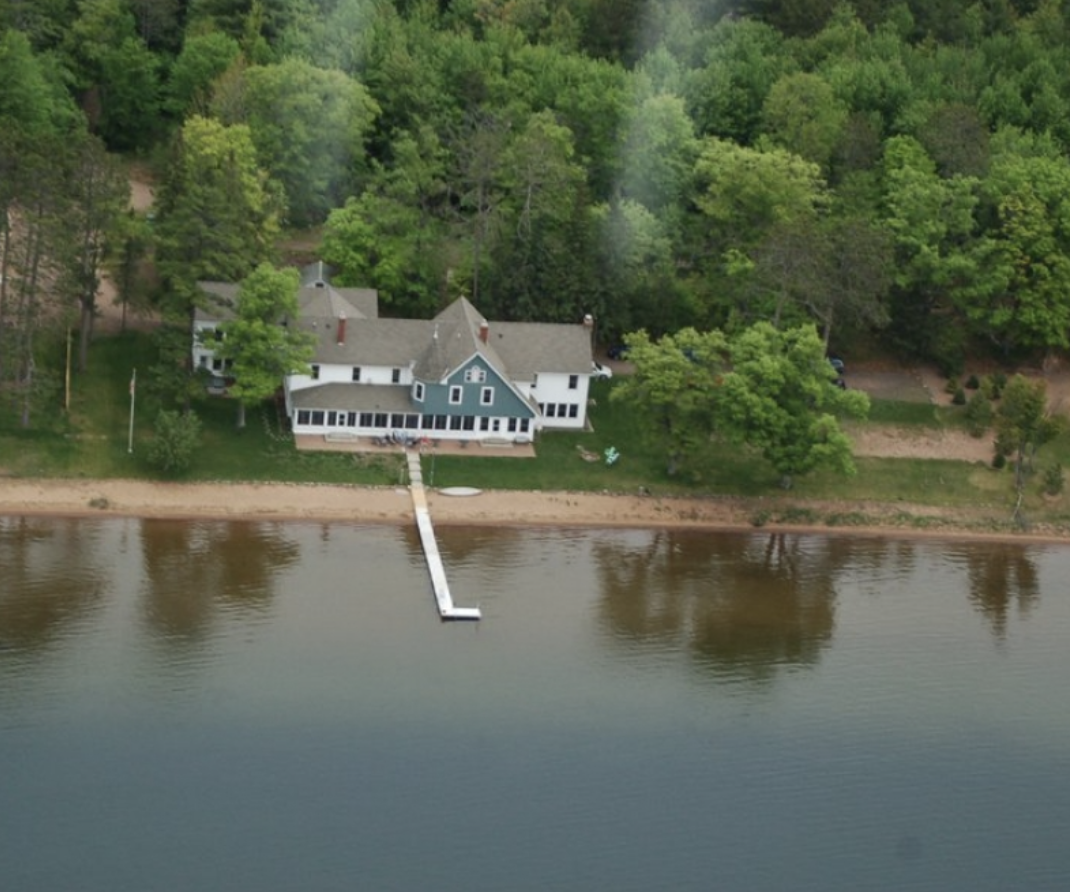
The Old Chicago Club — sleeps 35
The Old Chicago Club – 15 Bedrooms & 8 Baths is the largest of the five, with 15 bedrooms and eight bathrooms under one roof. The listing describes more than 10,000 square feet on three acres along Lac Courte Oreilles, with roughly 300 feet of level sand frontage. A private dock, boat and trailer parking, an extra freezer and a large all-together layout make it a strong fit for reunions, fishing groups and celebrations that do not want bedrooms scattered across separate buildings. Pets are not accepted.
For a group this large, “under one roof” is a meaningful distinction. There is one primary gathering address, while 15 bedrooms give organizers room to separate early risers, children, light sleepers and late-night talkers. The published extra freezer can support a multi-day food plan, and the boat and trailer parking directly addresses fishing-party logistics. The listing places the property a short drive from Hayward, so a crew can run downtown, museum and restaurant pods without turning the day into a long road trip. It is listed for year-round stays, allowing the same high-capacity layout to serve lake trips, fall gatherings and winter groups.
Wilson Bay Lodge Resort: four six-person cabins — sleeps 24
Wilson Bay Lodge Resort: (4) Six Person Cabins uses four separate lakefront cabins on Lost Land Lake rather than one large house. Each cabin sleeps six and has two bedrooms, a kitchen, a screen porch and access to a dock. That arrangement can suit four households that want private morning and bedtime routines while sharing the same resort grounds. The listing also notes lawn games and a 14-foot fishing boat with oars. Lost Land is a no-wake lake connected to Teal Lake by channel. This is a seasonal property, and pets are not accepted.
The sleeping pattern is repeated across the four units: a queen bedroom, a bedroom with two twin beds and a hide-a-bed in the living area. Air conditioning and Dish TV are listed in each cabin. This is the only qualifying option here that deliberately divides the published group capacity among four cabins, so the trip leader should make cabin assignments before arrival and designate which porch or outdoor area will serve as the daily meeting point. Badminton, croquet, horseshoes and volleyball give non-anglers easy resort-day choices. The quiet-water setting favors fishing and slower lake time over high-speed boating.
Birch Point Lodge — sleeps 22
Birch Point Lodge pairs a main lodge with a separate guest cottage on the Tiger Cat Flowage chain. The listing describes 40 wooded acres, extensive shoreline, private trails, a private island and multiple docks. Inside, the gathering spaces include a great hall, chef’s kitchen, lounge, game room, wine cellar, fitness area and sauna. Kayaks and paddleboards broaden the activity mix. With eight bedrooms and eight bathrooms, it is suited to groups that place a high value on substantial common areas and bathroom count. Confirm any pontoon terms directly with the manager. Pets are not accepted.
The main lodge’s great hall is described with a 25-foot ceiling, hand-hewn trusses and a stone fireplace, giving the whole party an indoor place to assemble. Separate spaces—the lounge, game room, fitness area and sauna—also let the group spread out when weather turns. The cottage creates another sleeping zone, while the one-bathroom-per-bedroom count is useful for wedding guests and multi-family stays with competing morning schedules. On-property trails, shoreline and paddlecraft mean several activity pods can operate without driving. This is a year-round listing; organizers should still confirm which outdoor equipment and waterfront features are available for their season.
Chippewa View Lodge — sleeps 16
Chippewa View Lodge sits on the Chippewa Flowage with a published 5,600 square feet, a 3.6-acre lot and about 425 feet of shoreline. The listing describes two powered private docks, a sand beach, level yard, chef’s kitchen, five main-level bedrooms plus a bunk room, and six and a half bathrooms. A game room with arcade games, ping-pong, pool and foosball joins a large theater room, while canoes and kayaks support the lake day. Direct access to ATV and snowmobile trail riding makes it especially relevant to four-season recreation groups. Pets are not accepted.
Five bedrooms on the main level can reduce stair traffic for a group that assigns rooms around age or mobility, though guests should ask the manager specific accessibility questions rather than infer step-free access. The bunk room supplies a different sleeping zone for children, cousins or a rider group. The two docks help separate fishing setup from casual waterfront time, and power at the docks matters to boat owners who need to discuss charging or equipment needs. Between the theater, game room, beach and paddlecraft, the listing provides credible bad-weather and fair-weather options without requiring all 16 guests to choose the same activity.
Mosbaek Lake Lodge — sleeps 16
Mosbaek Lake Lodge is a five-bedroom, four-bath lodge on a 40-acre Mosbaek Lake property. The listing highlights walking paths, fishing, a private dock, pedal boat and a deck with a covered bar. Its circular tower room and telescope give the house a feature that works as well for quiet mornings as group stargazing. The lodge is also listed on ATV and snowmobile routes, and pets are considered. Its combination of contained lake setting, trails and indoor-outdoor gathering areas can serve multi-family groups that want activities on the property.
The published bed mix includes three kings, three queens, a queen sleeper and a futon, so it is worth assigning actual beds before guests claim rooms. The private dock and pedal boat support a contained lake day, while the property’s walking paths create an easy activity for guests who do not ride or fish. The covered bar can function as the outdoor rally point, and the tower adds a quieter retreat from the main gathering areas. Because pets are considered rather than automatically accepted, disclose the number, size and type of animals before booking and obtain the policy in writing. The property is listed for year-round use.
Property capacities, amenities, policies and seasonal availability can change. Confirm the current listing details, sleeping arrangement, watercraft terms, fees, minimum stay and accessibility needs directly with the property manager before booking.
The big-group planning checklist
Before paying a deposit, ask:
- Is the published capacity for adults, total guests or a mix of adults and children?
- Are all bedrooms and bathrooms in one building?
- Which beds are private-room beds, bunks, sleepers or futons?
- How many vehicles and boat trailers can park on site?
- Are docks, beaches, paths and entrances level, stepped or sloped?
- Which watercraft and personal flotation devices are included?
- Are pets prohibited, accepted or considered case by case?
- What are the quiet hours, fire rules and visitor limits?
- Is the kitchen stocked with cookware for the actual group size?
- What is the backup plan for outages, severe weather or poor air quality?
Then plan the trip itself:
- One anchor activity per day
- Two or three optional pods
- A written car and boat roster
- One reserved full-group meal
- Groceries and ice assigned by household
- Allergy-safe food labeled
- A rainy-day bracket of games, museums and performances
- Current trail, water and event conditions checked before departure
- A shared map pin for the cabin and every meeting point
- A cleanup and checkout team assigned before the final morning
Book a Hayward cabin directly
Hayward rewards groups that plan the structure and leave room for discovery. Choose the lake or trail experience that matters most, give different ages and interests permission to split up, and reunite around the dock, dinner table or fire at the end of the day.
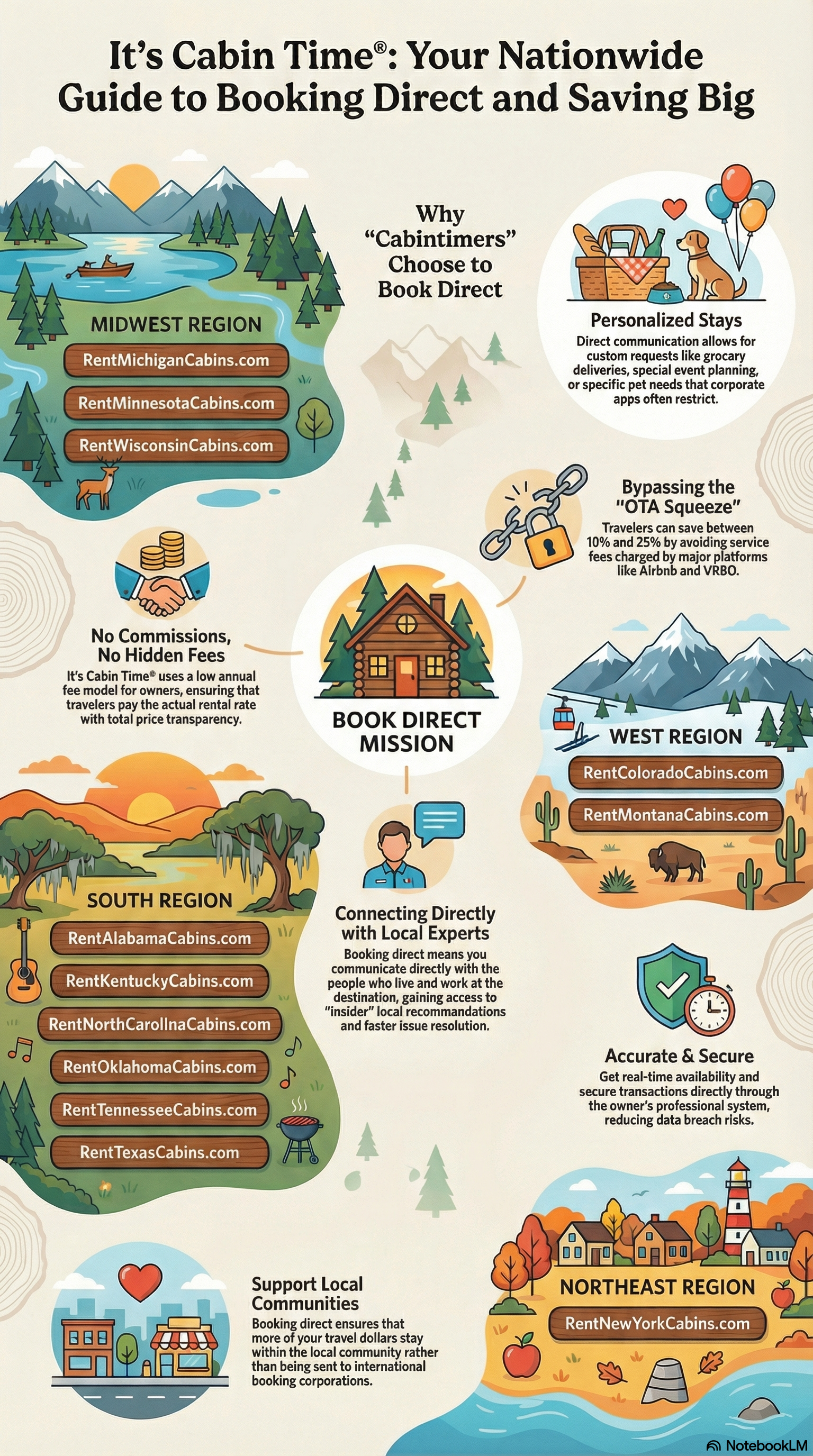
When the lodging is right, the rest gets easier. Compare the qualifying Hayward properties on RentWisconsinCabins.com, contact the property manager or owner directly and ask the questions that matter to your group. Booking direct keeps the conversation close to the people who know the cabin, helps you verify the exact fit and can save the marketplace fees commonly added by third-party booking platforms.

 It’s Cabin Time® Blog